


Professor Vladimir Airapetian appointed as Founding Director of the UWC Dilijan Summer Astrophysics Academy
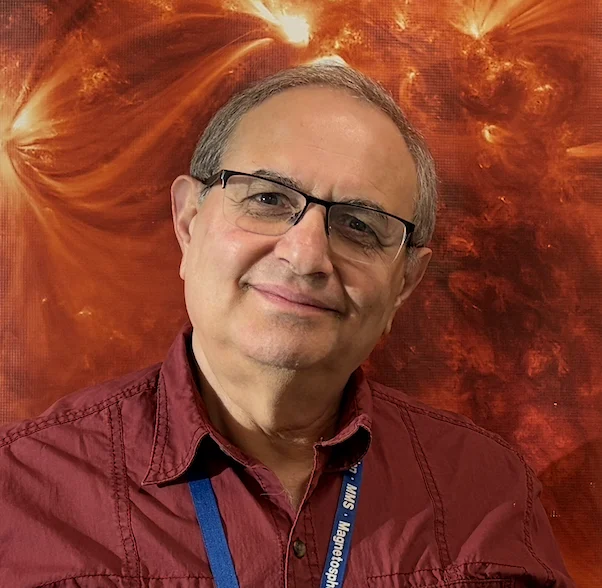
We are delighted to announce the appointment of Professor Vladimir Airapetian, a distinguished astrophysicist, as Founding Director of the UWC Dilijan Summer Astrophysics Academy.
Professor Airapetian will lead the Academy’s launch in summer 2027 and bring together a team of astrophysicists to teach and mentor students. He will oversee the implementation of the programme, which will give students the opportunity to conduct original research and explore questions about the universe using the tools and methods of astrophysicists. Professor Airapetian will share his expertise and enthusiasm for theoretical and observational astrophysics with Summer Academy participants, bringing to life the Academy’s motto, “Explore the Universe – Expand Your Mind”.
A graduate of Yerevan State University who earned his PhD in theoretical astrophysics at Armenia’s Byurakan Astrophysical Observatory, Professor Airapetian was inspired by the observatory’s founder and the founder of the school of theoretical astrophysics in the Soviet Union, Viktor Ambartsumian, whose discovery of stellar associations helped show that new stars are still forming in the Milky Way.
Professor Vladimir Airapetian is a Senior Astrophysicist at Heliophysics Science Division (HSD) /NASA’s Goddard Space Flight Center, and he is also a Professor at American University, Washington DC. He is a PI of NASA NExSS project “Mission to Young Earth 2.0”, PI of NASA Exobiology project on initiation of life on early Earth and Mars, PI of TESS Cycle 1, Co-I of HST-XMM-Newton project “Evolving Lives of Young Suns”, Co-I of ISSI team, the member of Steering Committee at NExSS and PCE3 NASA Astrobiology Research Coordination Networks. Professor Airapetian is a member of the leadership team of Sellers Exoplanet Environment Collaboration (SEEC) team.
He is also leading an interdisciplinary team of heliophysicists, astrophysicists, planetary scientists, chemists and biochemists from NASA Goddard, NASA Langley, Harvard University and Tokyo Tech to understand how extreme space weather events from the active stars affect physics and chemistry of exoplanetary habitability. He has over 25 years of experience in theoretical and observational astrophysics, heliophysics and astrobiology. Professor Airapetian specialises in the MHD modeling of solar and stellar winds, extreme coronal mass ejection events from the current and early Sun and their effects on Earth’s magnetosphere, ionosphere and thermosphere. His latest activity includes the application of state-of-the-art multidimensional heliophysics models to simulate environments of active stars and the young Sun to understand their impacts to the atmosphere of early Earth and Mars. These studies laid the foundation for the concept of initiation of biological molecules on early Earth and resolution of the Faint Young Sun’s paradox.
Commenting on his appointment Professor Airapetian said, “I’m delighted to help launch the Summer Astrophysics Academy in Armenia, where I began my own scientific career. I want students to experience the excitement of asking a question about the universe and using real data to see where it leads. Working alongside astrophysicists on their own research projects, they’ll discover how much of science begins with the confidence to ask a good question.”
The Summer Astrophysics Academy is a programme for young people aged 15–17. Over four weeks, a group of up to 36 participants from Armenia and around the world will live and work as a community of scientists, under the supervision of PhD-holding faculty. They will learn through lectures, problem sets, late-night coding sessions, collaborative data analysis, guest lectures as well as sports and other activities. The inaugural cohort will join 4 July – 1 August 2027. Applicants will go through a competitive process with financial assistance awarded based on demonstrated need.
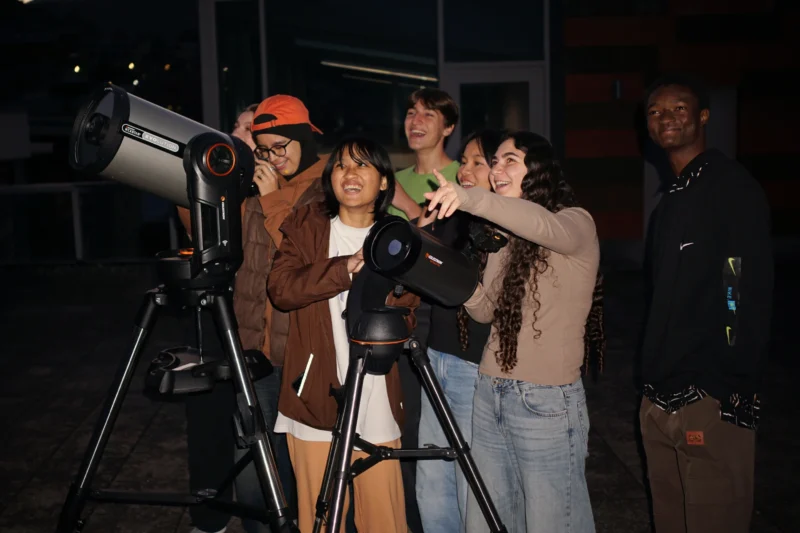
UWC Dilijan is an international boarding school in Armenia and a member of the global United World Colleges movement. Since opening in 2014, the school has brought together students from around the world to live and learn in an academically ambitious, culturally diverse and values-driven community. It has 220 students from 80 countries in the two-year International Baccalaureate Diploma Programme.
UWC’s mission is “to make education a force to unite people, nations and cultures for peace and a sustainable future.”
The UWC Dilijan Summer Astrophysics Academy extends this approach to a new generation of young scientists: combining academic rigour and original research with international living, collaboration and discovery.
Explore the Universe – Expand Your Mind