


World Bank: Armenia monthly economic update – September 2026
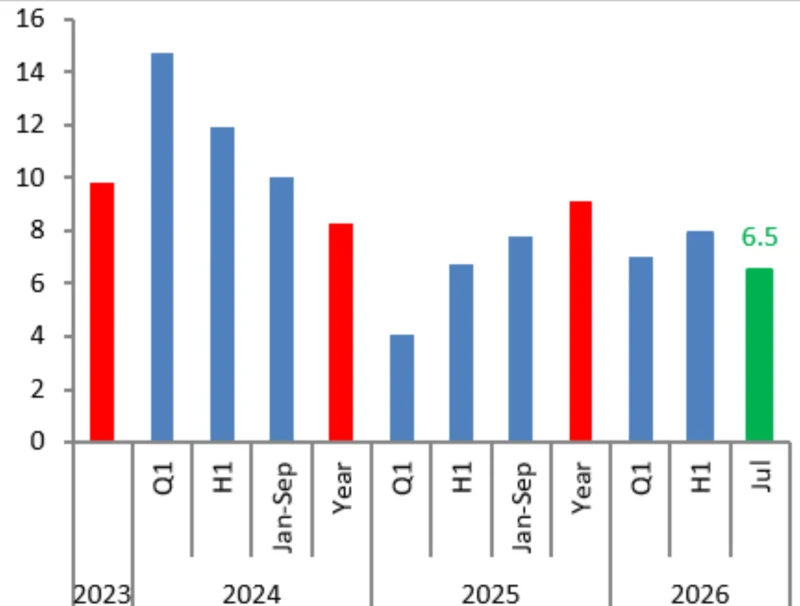
- Economic activity growth moderated to 6.5 percent (yoy) in July, as industry eased, while construction and services continued to buoy growth.
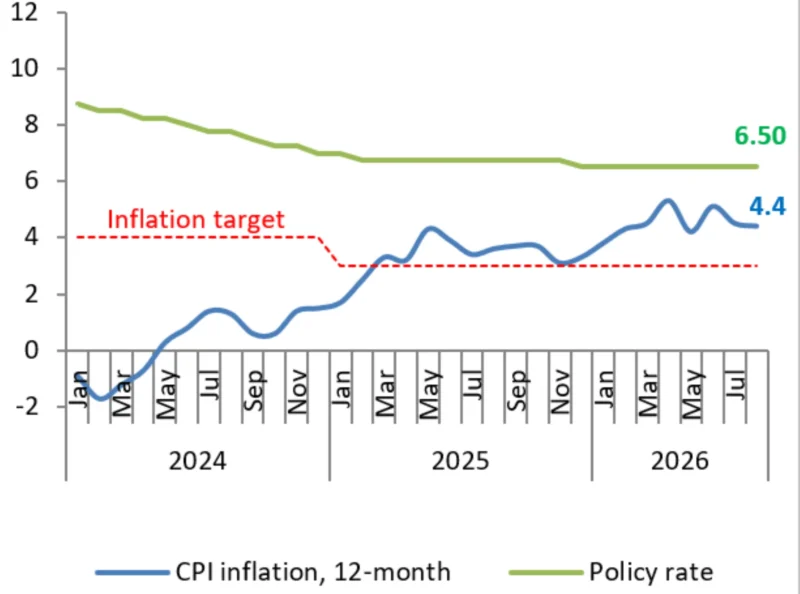
- Inflation fell slightly to 4.4 percent in July from 4.5 percent in June as food inflation decelerated.
- The trade balance widened further in July, with effects from the decline in the export of agricultural products.
- The budget recorded 0.3 percent of estimated annual GDP deficit in July, while cumulatively, it remains in surplus.
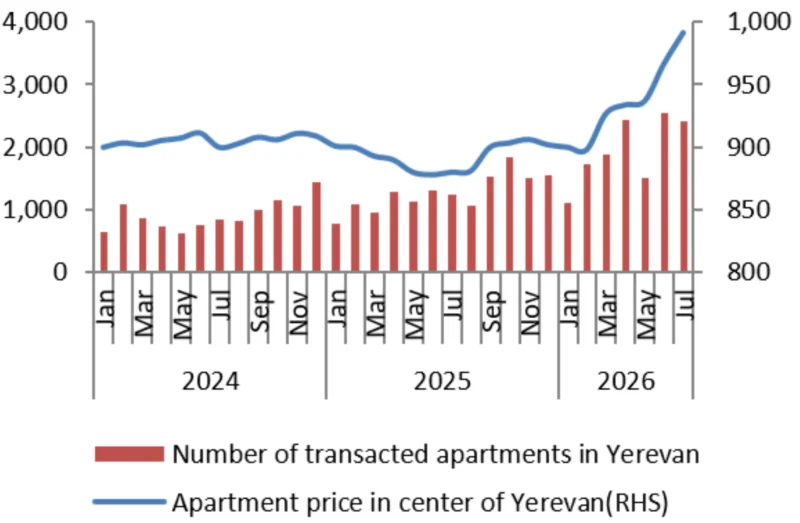
Economic activity moderated to 6.5 percent (yoy) in July, from 7.4 percent in June, but year-to-date cumulative growth remains strong. Construction and non-trade services remain the main drivers of growth, expanding 26.5 and 17 percent (yoy), respectively. Construction growth has been accompanied by a real estate pickup: apartment transactions in Yerevan nearly doubled in July, and prices in the city center rose 12.7 percent (yoy), fueled by demand from a new influx of Russians and the Armenian diaspora. Business registrations also rose 29 percent (yoy) in July, driven by a 45.7 percent (yoy) increase in LLC registrations. Industrial output grew only modestly (3.1 percent, yoy), as strong mining (14.4 percent, yoy) and manufacturing (5.9 percent, yoy) growth was largely offset by a 24.5 percent (yoy) contraction in electricity and energy, due to the temporary shutdown of the Armenia Nuclear Power Plant (ANPP) for planned maintenance. Cumulatively, economic activity rose 7.7 percent (yoy) in January–July 2026, exceeding initial projections.
Inflation fell slightly to 4.4 percent (yoy) in August from 4.5 percent (yoy) in July. Food and non-alcoholic beverage prices explain 57 percent of the inflation despite decelerating from 8.6 percent in June to 6.4 percent in August. Core inflation is close to headline inflation, reflecting the strong domestic demand and narrowing of the output gap. At its 4 August meeting, the Central Bank of Armenia decided to keep the policy rate unchanged at 6.5 percent, maintaining its commitment to the 3 percent inflation target.
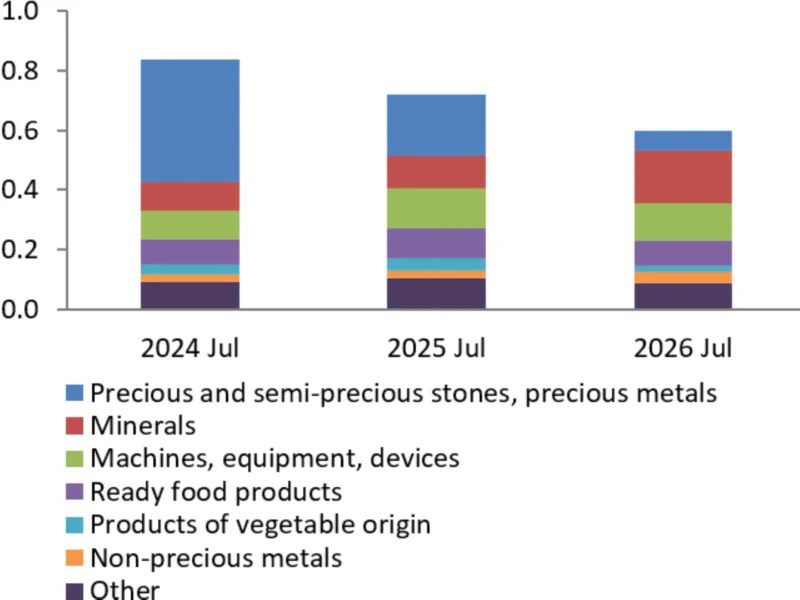
In July, exports contracted 15.7 percent (yoy) while imports rose 21.5 percent (yoy). The export decline was driven by a 66.2 percent (yoy) drop in precious and semi-precious stones; excluding this re-export item, exports grew 6.8 percent (yoy), led by minerals (up 59.1 percent from a low base). Agricultural exports fell sharply — vegetable products by 52.2 percent and agriproducts by 15.2 percent (both, yoy) — as Russia tightened restrictions on Armenian agri-food imports from April 2026, banning quarantine products (around 130 EAEU goods, including fresh produce and flowers) from June 12 and fish products from June 26. Import growth was driven by a doubling of machinery and equipment imports and a 61.2 percent (yoy) rise in minerals. Over January–July, exports fell 7.9 percent and imports rose 7.7 percent (both yoy), widening the trade deficit to 10 percent of estimated annual GDP, partly offset by services and income accounts. Tourist arrivals (mainly from Russia) grew 6 percent (yoy) over the same period.
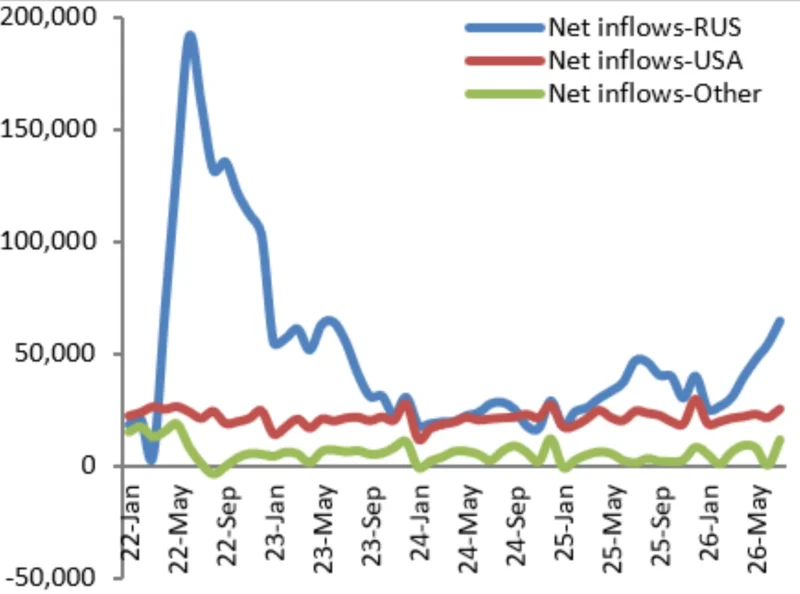
In July, net non-commercial money transfers rose 40 percent (yoy) from a low base, driven largely by continued inflows from Russia (up 37.3 percent, yoy), as well as the sustained influx of Russians into Armenia. These strong inflows supported dram appreciation: in August, the AMD strengthened 0.4 percent against the USD (mom) and 1.1 percent against the EUR (mom) and is 4.6 percent stronger against the USD relative to August 2025, though it depreciated 8.6 percent (yoy) against the RUB. Underpinned by robust remittance and capital inflows, gross reserves expanded to a record $6.5 billion in August, equivalent to 4.3 months of import cover.
Financial system indicators are sound. The Capital Adequacy Ratio stayed flat at 20.4 percent in July, and non-performing loans (NPLs) remained stable at 1.4 percent. Commercial bank deposits rose 2.7 percent (mom) while credit increased 1.4 percent (mom), resulting in a loan to deposit ratio of 1.07.
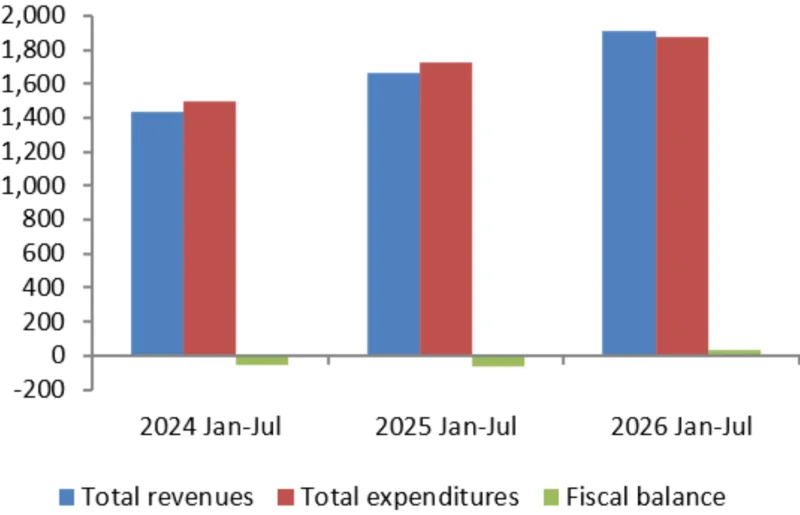
In July, the budget recorded a deficit of 0.3 percent of estimated annual GDP. Revenues grew 16.3 percent (yoy), driven by strong tax performance. VAT and income taxes each rose around 16 percent (yoy), together accounting for nearly two-thirds of revenue growth. Total expenditure expanded 20.1 percent (yoy), driven entirely by current spending (up 23.1 percent, yoy), which was propelled by a 34.5 percent (yoy) surge in social spending, including health. Capital expenditure contracted 8.9 percent (yoy), largely due to a 12.1 percent (yoy) drop in defense spending. Cumulatively through July, capital spending reached only 33 percent of the annual budget plan, signaling significant delays in public investment. Health spending continued to surge – up 76.1 percent (yoy) in July under the public health insurance scheme – with cumulative health expenditure reaching 82 percent of the annual plan by end-July, pointing to additional financing needs. On a cumulative basis (January–July), the budget remains in surplus at 0.3 percent of GDP, a significant difference from the planned full-year deficit of 4.3 percent of GDP. Government debt stood at 41.3 percent of GDP in July and is expected to rise through year-end.
Figure 1. Economic activity moderated to 6.5 percent in July
(Armenia Economic Activity Index, yoy change, %)
Source: Statistical Committee of Republic of Armenia
Figure 2. Net non-commercial money transfers rose sharply in July (yoy)
(USD thousand)
Source: CBA
Figure 3. Inflation fell slightly to 4.4 percent in July, driven by deceleration in food prices
(CPI inflation, yoy change, %)
Source: CBA
Figure 4. Exports contracted in July as precious and semi-precious stones and agricultural products fell, while minerals export increase
(USD billion)
Source: Statistical Committee of Republic of Armenia
Figure 5. Yerevan’s real estate market has picked up in recent months
(Number of apartments) (AMD thousand)
Source: CBA
Figure 6. A surplus equivalent to 0.3 percent of estimated annual GDP was registered in Jan-Jul
Source: Ministry of Finance